
Turn on any major award show or scroll through social media, and you will instantly see garments dripping in light-reflecting sequins and rhinestones. While shimmering embellishments now adorn casual denim, athleisure, and everyday T-shirts, they originated as exclusive symbols of social hierarchy, spiritual power, and royal wealth.
In global fashion marketing, the movement of high-shine garments from exclusive haute couture ateliers down to budget retail racks offers a classic textbook illustration of the downward-flow theory. This comprehensive analysis explores the history of light-reflecting materials, detailing how material science innovations, global supply chain sourcing, and master costumier Bob Mackie accelerated the trickle-down of glamour to the mass market.
Theoretical Framework: The Downward-Flow Adoption Model
The downward-flow theory—often called the trickle-down theory—is the oldest academic model of fashion adoption. First conceptualized by sociologist Georg Simmel in 1904 and rooted in Thorstein Veblen’s 1899 analysis of conspicuous consumption, the model posits that fashion trends originate at the absolute apex of the social and economic pyramid. Upper-class innovators adopt distinctive, high-priced garments to signal status, establish prestige, and differentiate themselves from the general public. As lower-income groups seek to imitate these high-status looks through cheaper mass-produced reproductions, elites abandon the style and seek fresh innovations, keeping the fashion cycle in perpetual motion.

Figure 1
Downward-Flow of Sparkle Price Zone Pyramid adapting fashion adoption models across four apparel price zones (Stone & Farnan, 2023)
In modern apparel manufacturing, this trend movement cascades downward across distinct market price zones. A trend debuts in haute couture and designer signature collections before being adapted into bridge, better, moderate, and budget markets. For sparkling embellishments, the downward flow required both cultural endorsement from elite tastemakers and technical breakthroughs in primary-level manufacturing.
Historical Foundations: From Ancient Royal Status to Costume Jewelry
Long before modern industrial looms automated embellishment production, shimmering adornments were hand-applied and reserved exclusively for royalty and sacred ceremonies. Ancient civilizations decorated garments with precious metal discs and crushed iridescent minerals to reflect light and signal social status. The evolution of light-reflecting trimmings reveals how sparkle transitioned from an ostentatious display of wealth into accessible retail style through clear historical milestones.
- Ancient Status Symbols & Etymology: Ancient Egyptians embroidered pure gold discs onto royal garments to signify power and prepare pharaohs for the afterlife. The word “sequin” itself originates from the Arabic sikka (minting die) and the 13th-century Venetian gold coin known as the zecchino.
- 18th-Century Paste Gems: During the 18th century, European jewelers crafted “paste”—hand-cut lead glass originally discovered near the Rhine River—to simulate the fire of natural diamonds for European nobility. This innovation laid the foundation for modern costume jewelry history by decoupling visual sparkle from precious gemstones.

- 1920s Tutmania & Flapper Glamour: The 1922 excavation of King Tutankhamun’s tomb sparked a global obsession with golden embellishments, heavily influencing flapper-era fashion. Dancers embraced short chemise dresses embellished with thousands of metal sequins and long strands of beads to add dynamic motion.
- Coco Chanel’s Costume Jewelry Revolution: In the 1920s, Coco Chanel redefined fashion rules by introducing “frankly fake” simulated pearls meant to coordinate with an outfit rather than display wealth. Her pioneering work proved that simulated gems and costume jewelry could serve as key design elements in a total fashion look.
Figure 2
Coco Chanel wearing Maltese cross cuffs and layered faux pearls in an iconic 1930s portrait demonstrating the rise of costume jewelry (The Jewellery Editor, n.d.)
- 1930s Hollywood Slink & Gelatin Discs: During Hollywood’s Golden Age, starlets wore slinky, body-conscious gowns decorated with early electroplated gelatin sequins that reflected studio lighting. This theatrical allure was famously immortalized in 1939 by Dorothy’s sequined ruby slippers in The Wizard of Oz.
These historical shifts demonstrate how early material innovations gradually broadened consumer access to high-shine aesthetics. By replacing heavy precious metals with glass and gelatin, designers brought glamour out of royal courts and onto the silver screen. This momentum set the stage for mid-century costumiers like Bob Mackie to push sparkling couture to its creative zenith.
The Apex of Couture: Bob Mackie, the “Sultan of Sequins”
Known alliteratively as the “Sultan of Sequins,” the “Rajah of Rhinestones,” and the “Guru of Glitter,” American designer Bob Mackie defined luxury showmanship at the top of the fashion hierarchy. Mackie transformed stage costuming into haute couture artistry, creating an aspirational visual language of high-impact glamour for entertainment icons. His design philosophy centered on unapologetic visibility, famously stating that a woman wearing his clothes is not afraid to be noticed.
Mackie built an extraordinary career by making legendarily confident performers impossible to ignore on stage and screen. Rather than imposing a rigid template, he personalized each creation to amplify the wearer’s unique public persona and stage presence.
To understand his position at the apex of high fashion, consider his most iconic client collaborations:
- Marilyn Monroe (1962): While working as a young sketch artist for Jean Louis, Mackie drew the original sketch for Marilyn Monroe’s presidential birthday dress, a sparkling, semi-sheer gown worn to sing “Happy Birthday, Mr. President.”
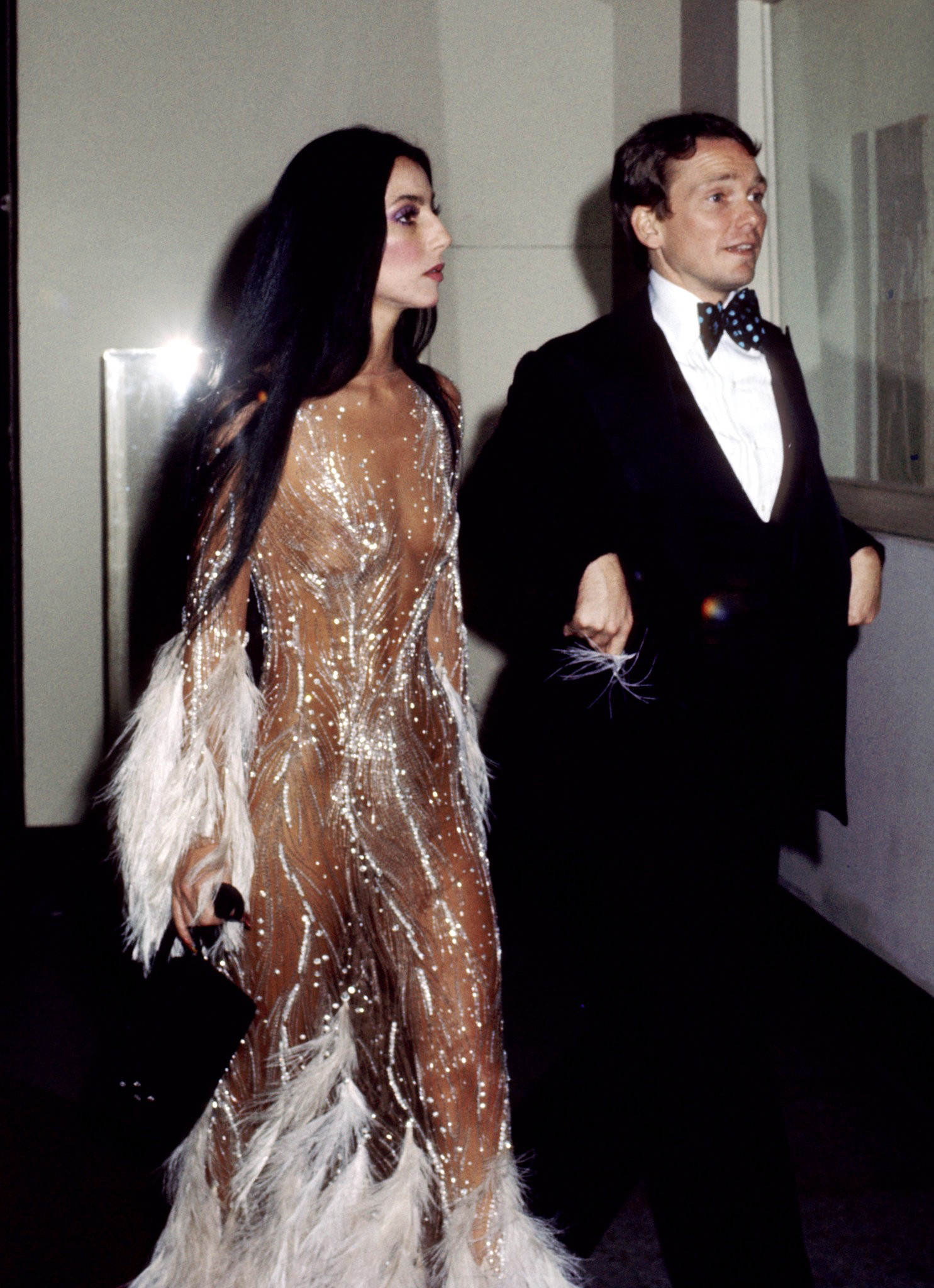
- Cher: Across a decades-long partnership, Mackie designed Cher’s most defining outfits, including her belly-baring 1986 Oscar gown, sheer red-carpet dresses, and stage costumes for The Sonny & Cher Show and The Cher Show.
- Carol Burnett: As the costume designer for The Carol Burnett Show costumes, Mackie created over 17,000 outfits, including the legendary 1976 “curtain rod” dress for the Gone with the Wind parody now held by the Smithsonian.
- Tina Turner: Beginning in the 1970s, Mackie helped craft Turner’s signature stage style, designing iconic, high-energy outfits like her 1979 “flame dress” and tour wardrobes.
- Entertainment Royalty: Mackie also created memorable designs for stars ranging from Diana Ross and the Supremes to Elton John, Dolly Parton, Whitney Houston, and Madonna.


Figure 3 and 4
On the left: Mylie Cyrus at 2025 Grammys (Source Getty Images)
On the right: Cher 55th Academy Awards (Source Getty Images; Credit Micheal Ochs Archives)
For a luxury trend to trickle down through the fashion business, it must first maintain cultural prestige at the apex of the market. Mackie’s archival creations continue to dominate global media through high-profile red-carpet revivals, keeping his high-fashion legacy relevant for new generations.
In recent years, contemporary pop stars and style icons have embraced vintage Bob Mackie gowns as ultimate fashion trophies:
- Kim Kardashian: Controversially wore Marilyn Monroe’s original Mackie-sketched gown to the Met Gala.
- Zendaya: Stepped out in a semi-sheer beaded 2001 Mackie dress that echoed a classic look originally created for Cher.
- Miley Cyrus: Performed her Record of the Year-winning song “Flowers” at the Grammy Awards wearing a vintage silver sequined-and-fringed Mackie frock.
- Sabrina Carpenter: Embraced the rhinestone renaissance by stepping out in three separate vintage Mackie dresses at the MTV Video Music Awards.
- Taylor Swift: Channelled showgirl glitz for her album The Life of a Showgirl, further sparking public interest in Mackie’s signature aesthetic.
By continually dressing world-class divas, Mackie established a top-tier visual standard that continues to inspire the downward-flow theory of fashion adoption. His decades of red-carpet artistry demonstrate how high-fashion sparkle captivates the public imagination before trickling down into accessible retail markets.
Material Science Innovations: Scaling High-End Sparkle
While Bob Mackie’s custom creations required hundreds of hours of painstaking hand-beading, a luxury trend cannot trickle down the fashion adoption pyramid without major manufacturing breakthroughs. The first giant leap in scaling light-reflecting embellishments occurred in 1891 when Daniel Swarovski invented an automated precision glass-cutting machine in Austria. This industrial innovation drastically reduced production costs compared to hand-cut glass, eventually leading to Swarovski’s iconic 1955 collaboration with Christian Dior to create the iridescent Swarovski Aurora Borealis crystal history.
Sequins underwent a parallel chemical revolution that shifted high-shine adornment from high-maintenance couture into everyday functional wear. Early 1920s flappers wore heavy metal discs or fragile gelatin sequins that notoriously melted when exposed to body heat or rain. Following World War II, material science progressed rapidly as chemical giant DuPont developed lightweight synthetic PET plastic and Mylar sequins, creating durable embellishments that could withstand washing machines and high-speed sewing. These synthetic breakthroughs allowed secondary-level apparel manufacturers to replace slow hand-craftsmanship with automated volume production.


Today, primary textile suppliers in global manufacturing hubs like Surat, India, utilize CAD-based embroidery mapping and multi-head industrial looms to stitch thousands of sequin reels per minute onto base fabrics like organza. By leveraging automated sequin feeding devices and magnetic clamping hoops, commercial producers drastically lower wholesale garment costing, enabling bridge and budget retailers to replicate runway-inspired glitz for the mass market.
Figure 4 and 5
4: This Callot Soeurs evening dress from 1910–1914 highlights the craftsmanship of early twentieth-century French couture. Made from cotton, silk, and metal, the gown features a raised waist and varied sequin embellishments designed to catch evening light—a historical example of sparkle in luxury fashion. (Source: The Met)
5: A multi-head Barudan embroidery machine is positioned over blue and green quilted textiles secured in rectangular embroidery hoops. Colorful thread cones and repeated geometric motifs highlight the equipment used to produce consistent embroidered designs across multiple pieces of fabric. (Source: Maggie Frames)
Primary Sourcing & Production: B2B Manufacturing Realities
On the primary level of the fashion business, raw material suppliers and textile converters work up to two years ahead of retail selling seasons to develop light-reflecting fabrics. To make intricate sequin designs economically viable for mass-market price zones, global apparel brands rely on specialized business-to-business (or B2B) sourcing networks in major textile manufacturing hubs like Surat, India. These industrial centers allow brands to balance custom design development with low Minimum Order Quantities (MOQs) and rapid sampling cycles.
Wholesale suppliers like FabricDiary sequin fabric manufacturing offer factory-direct sequin embroidered organza fabrics, catering to both boutique designers needing small trial batches and commercial manufacturers executing bulk production. By using CAD-based embroidery mapping, primary producers create proprietary sequin patterns that allow mid-tier brands to achieve high visual authority without paying haute couture production costs. Global buyers manage landed cost calculations—factoring in greige goods, shipping duties, and material wastage—to optimize profit margins before committing to bulk purchases.

Figure 6
Sheer pale blue fabric features flowing, embroidered scroll patterns edged with iridescent sequins. Soft folds emphasize the textile’s transparency and texture, while the sequins reflect rainbow-colored highlights.
Moving to the secondary level of the fashion business, apparel manufacturers and contractors utilize specialized high-speed multi-needle industrial embroidery machines to automate sequin application. Garment factories implement advanced technical setups, such as topstitching needles and magnetic clamping hoops, to maintain precise fabric tension and prevent thread breakage during high-speed stitching. This mechanical automation allows factory operators to attach thousands of plastic sequin reels per minute, replacing expensive hand-beading with scalable industrial sequin machine embroidery techniques.
During production planning, apparel merchandisers calculate exact garment costing by analyzing direct cut-and-sew labor, factory burden, and raw material inputs. To further reduce unit costs, brands leverage offshore apparel manufacturing and tariff advantages in labor-cheap regions, taking advantage of tariff frameworks like Section 807 where cut pieces are assembled abroad. By dividing labor through section work or modular manufacturing teams, factories efficiently produce floor-ready embellished garments that deliver luxury-level shine to high-street retail racks.
Mass Market Acceptance & Commercialization: “Sequins Are the New Black”

During the 1960s and 1970s, mass media and pop culture accelerated the downward diffusion of high-shine garments from exclusive runways to mainstream audiences. The Supremes brought glamorous sequined dresses into living rooms across America, using sparkling Motown outfits as a symbolic suit of armor to challenge racial stereotypes during the civil rights movement. As the disco era took over the 1970s, high-shine jumpsuits and light-reflecting paillettes dominated dance floors at Studio 54 disco fashion culture, with designers like Halston creating fluid, body-skimming sequined silhouettes.
Figure 7
This 1967 publicity portrait shows the Supremes in matching sequined dresses, statement earrings, and bouffant hairstyles. Their coordinated look captures the glamour of 1960s Motown fashion and illustrates how sparkle helped shape the group’s visual identity. (Source: Wikipedia)
Sparkle also became a powerful vehicle for gender expression and theatrical performance through icons like David Bowie, who challenged traditional social conventions with gender-defying sequined jumpsuits. In 1983, Michael Jackson further catapulted sparkling embellishments into global pop culture during his historic Billie Jean moonwalk performance, wearing a black sequin jacket and his signature white sequin glove. Jackson originally adopted the single sequined glove not merely for style, but as a protective cover for his developing vitiligo skin condition.
Throughout the 1980s and 1990s, high-impact glitz solidified its place in high fashion and red-carpet culture through designers like Gianni Versace, who crafted fearless, body-conscious sequined gowns. Industry trend reports from WGSN noted that high-street retailers doubled their glitzy applications to meet surging consumer demand for everyday sequin trends and retail forecasting across all age demographics. Designer Ashish Gupta described sequins as a spirited “protest against gloom,” serving as psychological mood lifters that instantly elevate basic garments into luxury statements.
Contemporary fashion consumers and Gen Z shoppers have completely dismantled old dress codes that previously restricted sparkle to formal eveningwear or holiday parties. Former J. Crew creative director Jenna Lyons famously declared that sequins are the new black, reflecting how high-shine embellishments have successfully integrated into daily street style. Modern consumers now routinely pair sequined skirts with oversized hoodies, or layer sparkly tops beneath tailored blazers alongside casual denim jeans.


At the apex of commercialization, the business model of couture costumier Bob Mackie illustrates the tension between high-fashion exclusivity and mass-market licensing. While Mackie built an iconic global brand as the “Sultan of Sequins” dressing divas and TV stars, his name and visual aesthetic became prime targets for broad consumer monetization.
In late 2025, a major legal dispute erupted when Bob Mackie filed a lawsuit against department store giant JCPenney over an unauthorized collection titled Mackie: Bob Mackie collection. Mackie claimed he was “stunned” by the mass-market collection, asserting that he had no involvement in its design and that associating his name with budget apparel diluted his decades of couture prestige.
Figure 8 and 9
8: Lane 201’s brown sequin mini skirt paired with an oversized cream sweater illustrates how sparkle can be incorporated into casual daytime fashion (Lane 201, n.d.).
9: Sequined dresses from JCPenney’s 2025 Mackie: Bob Mackie collection bring the designer’s signature sparkle to a wider market, with every piece priced under $300 at launch (JCPenney, 2025). Photo courtesy of JCPenney.
This conflict highlights a fundamental tension in fashion marketing: while downward licensing expands revenue, over-commercialization risks eroding the exclusivity that made the brand valuable in the first place. Today, global B2B textile manufacturers supply engineered sequin fabrics directly to fast-fashion brands and mass-market retailers to sustain high commercial volume. Innovations such as stretchable sequin knits, softer fabric backings, and reversible sequin fabrics have allowed high-shine textiles to expand beyond formal gowns into resort wear, athleisure, and everyday accessories. As a result, the downward flow of sparkle has reached its ultimate culmination stage, transforming what was once a rare royal status symbol into an accessible, mass-produced staple of global fashion retail.
Conclusion & Strategic Marketing Takeaways
The evolution of light-reflecting embellishments—from ancient status symbols to Bob Mackie’s red-carpet couture and modern everyday street style—provides a clear real-world demonstration of the downward-flow theory of fashion adoption. By observing how high-shine textiles move across apparel price zones, fashion marketers can better anticipate consumer demand shifts and time inventory cycles effectively.
For luxury designers and brand managers, navigating downward diffusion requires balancing mass-market sales volume against long-term brand equity. As demonstrated by Bob Mackie’s extensive licensing ventures and subsequent legal disputes over retail partnerships, expanding into accessible price zones must be executed without diluting the brand’s core heritage. Marketers must carefully structure corporate licensing agreements to maintain strict quality standards while capturing broader market share.
From a production and sourcing perspective, capturing the commercial potential of high-fashion embellishments depends on material science and supply chain integration. Technological breakthroughs—such as Swarovski’s automated crystal cutting, synthetic PET plastic sequins, and multi-needle machine embroidery—allow manufacturers to replicate couture aesthetics at popular price points. Aligning with specialized global suppliers for sequin fabric wholesale sourcing ensures that brands achieve strong profit margins while delivering on seasonal trend timing.
Ultimately, while fashion cycles continuously evolve, the human attraction to shine remains a permanent fixture of consumer psychology. Whether applied to custom runway gowns or mass-market daytime denim, high-shine design elements will continue to flow through the fashion business ecosystem. Marketers who master the interplay between trend forecasting, material innovation, and diffusion theory will remain uniquely equipped to turn creative brilliance into commercial success.
References
Bluestreak Crystals. (2026). The history of Swarovski crystals: From 1895 to today. https://www.bluestreakcrystals.com/blogs/news/history-of-swarovski[1]
Digital Sparks. (2026, September 24). Bob Mackie and the power of building your brand by building someone else’s. https://digitalsparks.co.uk/building-brand-through-client-success-bob-mackie/[2]
FabricDiary. (2026, May 2). Custom sequin fabric manufacturer for global fashion brands. https://fabricdiary.com/blogs/articles/custom-sequin-fabric-global-brands[3]
Fashion Beauty Runway. (2025, December 22). Sequins: How sparkle is fashion’s ultimate lux statement, from movie star glam to Gen Z cool. https://www.fashionbeautyrunway.ca[4]
JCPenney Newsroom. (2025, September 11). JCPenney launches Mackie: Bob Mackie collection to bring red carpet glamour to all. https://corporate.jcpenney.com/2025/09/11/jcpenney-launches-mackie-bob-mackie-collection-to-bring-red-carpet-glamour-to-all/[5]
JD Institute. (2021, July 22). Rhinestones and their shining history. https://www.jdinstitute.edu.in/rhinestones-and-their-shining-history/[6]
Kochhar, S. (2026, September 28). Decoding the trickle-down theory in fashion: How trends move. UDIT. https://www.udit.edu.in/blog/design/fashion/decoding-trickle-down-theory-from-high-end-trends-to-mainstream-styles/[7]
MaggieFrameStore. (2025, July 10). Machine embroidery with sequins: Essential techniques, tips, and best practices. https://maggieframestore.com/blogs/maggieframe-news/machine-embroidery-with-sequins-essential-techniques-tips-and-best-practices[8]
Smithsonian Magazine. (2012, December 28). A history of sequins from King Tut to the King of Pop. https://www.smithsonianmag.com/arts-culture/a-history-of-sequins-from-king-tut-to-the-king-of-pop-8035/[9]
Stone, E., & Farnan, S. A. (2023). The dynamics of fashion (6th ed.). Fairchild Books.[10]
The Licensing Letter. (2023, June 9). From Hollywood to TikTok: Bob Mackie’s timeless designs earn a new legion of fans. https://thelicensingletter.com/from-hollywood-to-tiktok-bob-mackies-timeless-designs-earn-a-new-legion-of-fans/[11]
The Style Historian. (2024, December 29). 2025 fashion trends unpacked: the history of sequins. https://www.thestylehistorian.com/articles/2025-trends-unpacked-the-history-of-the-sequin[12]
Times of India. (2025, November 3). Bob Mackie sues JCPenney over alleged misuse of his name and designs. https://timesofindia.indiatimes.com/life-style/fashion/buzz/bob-mackie-sues-jcpenney-over-alleged-misuse-of-his-name-and-designs/articleshow/125047615.cms[13]
Wikipedia. (2026, September 28). Bob Mackie. https://en.wikipedia.org/wiki/Bob_Mackie[14]
Wright, M. E. (2026, September 19). Remembering designer Bob Mackie and his impact on American culture. LancasterOnline. https://lancasteronline.com/entertainment/remembering-designer-bob-mackie-and-his-impact-on-american-culture/article_125047615.html
Visual Material & Media References
Figure 1: Stone, E., & Farnan, S. A. (2023). The downward-flow of sparkle across apparel price zones [Infographic created with AI assistance, 2026]. Adapted from The dynamics of fashion (6th ed.). Fairchild Books.
Figure 2: The Jewellery Editor. (n.d.). The legendary Coco Chanel, both a friend and muse to Fulco di Verdura, pictured in one of her most iconic photographs wearing her Maltese cuffs [Archival photograph]. https://www.thejewelleryeditor.com/images/the-legendary-coco-chanel-both-a-friend-and-muse-to-fulco-di-verdura-pictured-in-one-of-her-most-iconic-photographs-wearing-her-maltese-cuffs/
Figure 4: MaggieFrameStore. (2025, July 10). Machine embroidery with sequins: Essential techniques, tips, and best practices[Industrial photograph]. https://maggieframestore.com The Metropolitan Museum of Art. (n.d.). Search the collection: Sequined dress artifact (Accession No. 81139) [Archival record]. https://www.metmuseum.org/art/collection/search/81139
Figure 7: Wikipedia. (2026, September 28). The Supremes [Archival photograph]. Wikimedia Foundation. https://en.wikipedia.org/wiki/The_Supremes
Figure 8: JCPenney Newsroom. (2025, September 11). JCPenney launches Mackie: Bob Mackie collection to bring red carpet glamour to all (Project_Shine_04) [Promotional photograph]. Penney IP LLC. https://corporate.jcpenney.com/wp-content/uploads/2025/09/Project_Shine_04.jpg
Figure 9: Lane 201. (n.d.). Brown sequin mini skirt [Product photograph]. https://lane201.com/products/brown-sequin-mini-skirt
AI Use Statement
In accordance with Hofstra University Zarb School of Business syllabus guidelines for MKT 173 (Global Fashion Marketing), Generative AI tools (NotebookLM) were utilized as research and editorial assistants in preparing this blog post. AI assisted in synthesizing course readings from The Dynamics of Fashion (6th ed.) by Elaine Stone and Sheryl A. Farnan and formatting APA 7th edition citations. All historical facts, corporate case studies, and image credits were cross-referenced and verified against primary industry sources prior to publishing.




Leave a Reply