As Halloween approaches each autumn, parents everywhere find themselves navigating crowded store aisles or piecing together DIY outfits for school parades. Whether your teenager is dressing up for a concert or your youngest wants to be a superhero, today’s costumes are remarkably more comfortable, stretchy, and durable than the itchy, flammable disguises of Gen X‘s childhoods.
Behind every flexible superhero jumpsuit and glittering stage outfit lies a fascinating history of material science, supply chains, and high-tech textile innovation. In global fashion marketing, the movement of high-performance fabrics—from elite concert couture down to everyday Halloween dress-up—provides a textbook example of how industry innovation drives modern apparel.
This blog post explores how costume materials evolved from rigid, heavy natural fibers into engineered synthetics, making modern outfits lighter, tougher, and more dynamic than ever before.
Trickle-Down & Supply Chain Economics
To understand how high-tech materials move from stadium stages to local retail racks, fashion marketers rely on the downward-flow theory of fashion adoption. First conceptualized by sociologist Georg Simmel, this model explains how cutting-edge styles originate among high-status innovators before trickling down to mass-market consumers. In costume design, material breakthroughs begin on high-budget concert tours, Broadway productions, and haute couture runways before being adapted for commercial retail.

Turning custom stage concepts into accessible consumer apparel requires a coordinated manufacturing network across multiple levels of the fashion business. On the primary level, fiber producers and textile mills work 12 to 24 months in advance to develop unfinished base textiles known as greige goods. Textile converters then purchase these raw fabrics to apply essential flame-retardant, water-repellent, or metallic coatings required for safety compliance and theatrical lighting. Finally, secondary-level apparel manufacturers use industrial multi-needle machine embroidery and automated CAD systems to mass-produce floor-ready outfits for store shelves.
Historical Foundations: From Rigid Silks to Synthetic Workhorses
For centuries, costume makers were strictly limited by organic materials harvested directly from their local environments. Ancient ritual disguises relied on animal hides, woven wools, and plant fibers to ward off spirits or signal tribal authority. As theatrical storytelling expanded through the Renaissance and 19th century, costumes featured opulent silks, heavy velvets, and stiff damasks to convey nobility under early stage lighting.

Although these natural textiles looked grand under candlelight, they presented major physical drawbacks for performers:
- Extreme Garment Weight: Period costumes frequently weighed over 20 pounds, causing severe physical exhaustion and restricting movement.
- Laundering Vulnerability: Natural silks and velvets rapidly absorbed sweat, causing permanent staining, fiber breakdown, and lingering odors.
- Rigid Mobility: Heavy weaves and stiff internal boning forced actors into rigid postures, preventing active dance choreography.
Figure 2 Archival 1750 Corseted Silk Dress
An 18th-century corseted dress from The Metropolitan Museum of Art, featuring heavy internal boning and rigid natural silk construction
The mid-20th century synthetic revolution fundamentally transformed costume fabrication through key chemical breakthroughs:
- Rayon (1910): The first manufactured cellulosic fiber provided a soft, silky drape at a fraction of the cost of real silk.
- Nylon (1939): Synthetic polyamide offered unprecedented seam strength, elasticity, and resistance to physical abrasion.
- Polyester (1953): PET polyester introduced wrinkle resistance, extreme color fastness, and easy machine laundering.
- Spandex / Elastane (1959): Revolutionized performance apparel by stretching up to 500% while maintaining full shape recovery.

Figure 3 Vintage 1950s Synthetic Nylon Dress
A mid-century 1950s dress constructed from manufactured nylon fiber, demonstrating early synthetic textile integration in women’s apparel. (eBay, n.d.)
By replacing delicate natural fibers with engineered synthetics, garment manufacturers brought durability and lightweight comfort to professional stages and commercial retail.
Engineered Synthetics & Tour Replicas: Durability Under Spotlights
In modern entertainment marketing, a pop star’s touring wardrobe must endure conditions that would destroy standard everyday clothing. Stadium concert tours run for over 100 shows across wildly different global climate zones and humidity levels. Costumes must withstand intense choreography, heavy sweat, and rapid nightly laundering without fading or tearing. To meet these extreme demands, costume tailors rely on performance fabrics specifically engineered for structural durability:
- Tensile Seam Strength: Engineered polyesters and polyamides resist popping seams during dynamic dance routines.
- Spotlight Color Fastness: Synthetic fibers retain chemical dyes under intense 10,000-watt stage lights far better than natural cotton or silk.
- Moisture Management: Moisture-wicking synthetic microfibers pull perspiration away from the skin to keep performers cool and dry.
- Lighting Optics: Designers balance light-absorbing matte velvets for dramatic depth with reflective metallic nets and sequins that scatter light across stadium crowds.
These material specifications ensure that stage outfits maintain their flawless visual appeal throughout a multi-city tour.

Figure 4 Chappell Roan Live Concert Wardrobe
Pop artist Chappell Roan performing live on stage in an elaborate, highly styled theatrical concert costume (Photo by Dana Jacobs / WireImage via Teen Vogue, 2024)
Specialty Fabric Innovations
Constructing modern stage wardrobes requires specialized textile engineering that combines dramatic visual flare with athletic flexibility. Innovations in warp knitting and polyurethane coatings allow designers to simulate luxury aesthetics without restricting movement.
Four key specialty fabric categories define modern performance wardrobes:
- 4-Way Stretch Bi-Elastic Lycra: An 80/20 polyamide-elastane blend, bi-elastic performance fabric stretches equally in all directions to create a second-skin fit.
- Coated Synthetics (Spalmato Leather): Polyurethane-coated fabrics replicate the high-shine look of leather or latex without the stifling weight or heat of real animal hides.
- Rigid Polyamide Tulles (Savoia Tulle): 100% polyamide mesh holds the architectural shape of skirts and tutus without sagging from sweat or stage humidity.
- Elastic Sequins (Paillettes Elastica): Micro-sequins stitched onto elastic bases allow garments to glitter under spotlights while accommodating acrobatic moves.
These engineered materials give performers total freedom of movement while creating dramatic, larger-than-life stage silhouettes


Figure 5&6 Authentic Leather vs. Polyurethane Synthetic Leather Material Comparison
A side-by-side material comparison displaying authentic black leather hides alongside a 40% polyurethane, 30% viscose, and 30% polyester synthetic faux leather fabric (Leatherbox, n.d.; Stragier, n.d.)
21st-Century High-Tech & Mechanical Aesthetics
In 21st-century costume design, material science has merged with electronic engineering to turn garments into dynamic, interactive displays. Rather than serving as passive dress, modern costumes act as intelligent technological interfaces between the performer and the audience.

Contemporary costume designers leverage cutting-edge technical breakthroughs to build unforgettable visual spectacles:
- Wireless LED Arrays: Micro-LED circuits and conductive threads are embedded directly into fabrics, allowing lighting crews to wirelessly sync outfit colors with concert music.
- Shape Memory Alloys (SMA): Woven nickel-titanium wires contract and shift when heated by low electrical currents, enabling garments to bloom or transform on stage.
- 3D-Printed Liquid Structures: Custom polymer structures and 3D printing create lightweight, shatterproof stage armor tailored precisely to performer body scans.
- Digital Avatar Prototyping: Designers utilize CLO 3D fashion design software to simulate dynamic fabric draping and strain on virtual avatars, eliminating physical sample waste.
Figure 7 Dove Cameron in Custom 3D-Printed ‘Spiral Nebula’ Met Gala Gown
Actress Dove Cameron wearing Iris van Herpen’s custom 3D-printed “Spiral Nebula” gown at the 2022 Met Gala red carpet (Photo via Iris van Herpen / 3D Printing Industry, 2022)
These interactive technologies push costume design beyond traditional tailoring into the realm of kinetic art.
Halloween & Retail Crossover: How Mass Markets Overhauled Costume Season
If you have ever helped your child pull on a superhero jumpsuit or adjusted a costume mask before trick-or-treating, you have experienced a quiet revolution in retail material science. For mothers who remember the costumes of the 1970s and 1980s, today’s outfits are light-years away from the stiff vinyl smocks, suffocating plastic face masks, and dangerous rubber bands of our childhoods.
The History of Dress-Up: From Crepe Paper to Mass Production
In the 1920s, costume-making was a resourceful DIY craft where families used fabric scraps, unbleached cotton, and crepe paper guides like the famous Denison Bogy Books for DIY costumes to assemble handmade outfits. By the mid-20th century, commercial pioneers like Ben Cooper Inc., Collegeville, and Halco began mass-producing licensed character costumes based on radio, comic, and TV icons. However, these early commercial suits relied heavily on stiff papier-mâché masks and fragile synthetic rayon that lacked breathability and tore easily.
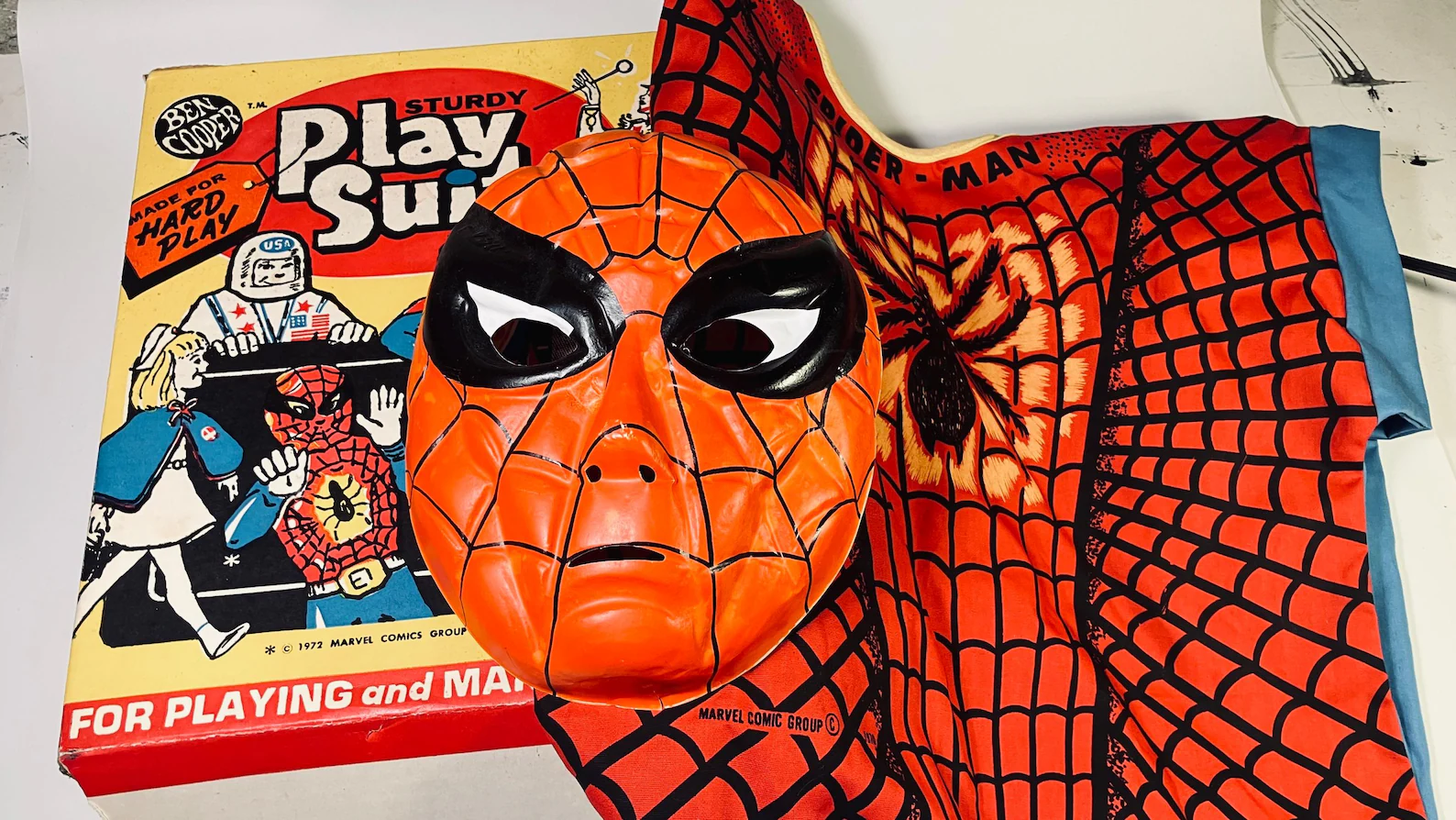
During the 1970s and 1980s, retail store aisles became dominated by thin vinyl smocks tied behind the neck and accompanied by brittle plastic face masks. While culturally memorable, these mass-market suits were notoriously non-breathable, scratchy against the skin, and prone to popping at the seams during active trick-or-treating.
In the 21st century, the commercial costume industry underwent a complete material overhaul by replacing rigid plastics and fragile synthetics with engineered performance textiles. Today’s retail outfits feature four-way stretch Lycra, machine-washable PET polyester, and soft brushed fleece that give children total athletic flexibility and built-in warmth.

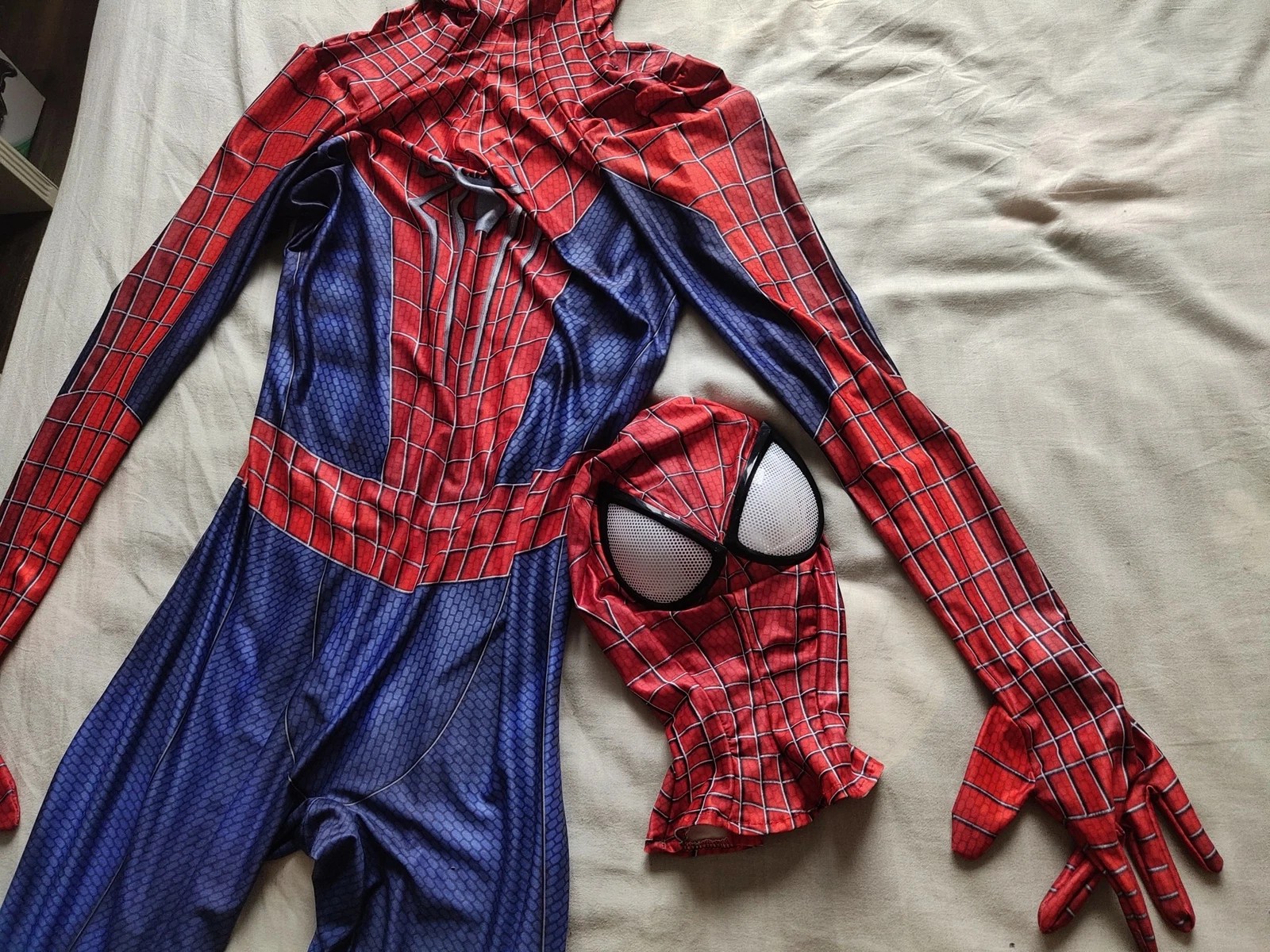
Figure 8 (left) Vintage 1973 Ben Cooper Spider-Man Costume
A vintage 1973 boxed Ben Cooper Spider-Man Halloween play suit crafted from cotton and thin polyester (Etsy, n.d.)
Figure 9 (right) Modern 4-Way Stretch Spandex Spider-Man Suit
A contemporary Spider-Man cosplay suit manufactured from 4-way stretch elastane and polyester, providing full athletic mobility (eBay, n.d.)
What Is Actually Inside Your Child’s Costume Today (And Why)?
Today’s costume manufacturers rely on the exact same high-tech textile innovations developed for professional concert stages and athletic performance wear. When you read the care tag on your child’s costume, you are seeing a carefully engineered mix of synthetic fibers designed for safety, mobility, and easy maintenance:
- PET Polyester (The Workhorse Fiber): Engineered polyester makes up over 80% of modern costumes because it is lightweight, wrinkle-resistant, extremely dye-fast under party lights, and easily machine-washed after sticky trick-or-treating mishaps.
- Spandex & Bi-Elastic Lycra (The Stretch Factor): Blending 10% to 20% elastane into synthetic knits creates a 4-way stretch fabric, allowing children to run comfortably and letting parents easily layer warm winter coats or thermals underneath without popping seams.
- Brushed Polyester Fleece (The Comfort Upgrade): Replacing scratchy 1970s crinolines, soft brushed polyester microfibers line animal costumes and toddler onesies to provide a gentle skin feel and insulation during chilly fall evenings.
- Polyurethane (Spalmato Synthetic Leather): High-shine superhero armor and boot covers use lightweight polyurethane coatings applied to flexible polyester bases, mimicking real leather without forcing kids into heavy, stifling hides.
Safety First: The Hidden Textile Legislation
The shift toward modern synthetic costumes was heavily driven by federal safety mandates, specifically the FTC Flammable Fabrics Act care regulations. Because early rayon and untreated cotton costumes posed severe fire risks near candlelit jack-o’-lanterns, federal laws forced manufacturers to adopt self-extinguishing synthetic fibers or apply mandatory flame-retardant finishes. Today, commercial costume brands source their materials directly from specialized trade suppliers, such as Cimmino’s flame-compliant Halloween fabric catalog, guaranteeing that materials meet strict flame resistance and tear-strength standards.
Sustainable Trick-or-Treating: Beating Single-Use Waste
Despite these safety and comfort upgrades, the explosion of fast-fashion pop-up shops has created a new challenge: millions of cheap polyester costumes end up in landfills after a single night. To combat this environmental waste, fashion historians recommend treating Halloween as a creative styling challenge rather than a disposable shopping spree.
You can combine high-quality activewear wardrobe basics—like stretch leggings, fleece hoodies, and thermal tops—with thrifted vintage accessories to build comfortable, sustainable, and truly unique costumes that last far beyond October 31st.
Conclusion
The journey of costume materials—from heavy organic hides and flammable vintage smocks to bi-elastic synthetics and 3D-printed smart wearables—shows how material science quietly shapes our daily family lives. By observing how high-performance textiles trickle down from stadium concert tours to children’s retail racks, fashion marketers and savvy parents alike can better appreciate the functional engineering behind what we wear. Whether designing high-tech stage couture for a global tour or picking out a safe, comfortable Halloween outfit for your kids, modern textile innovation turns creative imagination into durable, everyday reality.
Sources
Text & Literature References
- Berzowska, J., & Coelho, M. (2005). Kukkia and vilkas: Kinetic electronic garments. In Ninth IEEE International Symposium on Wearable Computers (ISWC’05), USA, 82–85. IEEE.
- Blackstock, J. (2024, September 24). The evolution of Halloween costumes. Taproot Therapy Collective. https://gettherapybirmingham.com/blog/the-evolution-of-halloween-costumes/
- Cimmino. (2026, September 14). Cimmino Halloween catalog: Fabrics for costumes, setups, and decorations. https://www.cimmino.com/en/cimmino-halloween-catalog-fabrics-for-costumes-setups-and-decorations/
- Cimmino. (2026, September 22). Fabrics for theatrical costumes: A complete guide to choosing fabrics for performances. https://www.cimmino.com/en/fabrics-for-theatrical-costumes-a-complete-guide-to-choosing-fabrics-for-performances/
- Fitinline. (2026, May 11). Performance wear is becoming everyday fashion across modern apparel markets. https://fitinline.com/article/read/performance-wear-is-becoming-everyday-fashion/
- Hann, M. (2025, August 10). From Britney Spears to Dolly Parton: How your favourite pop stars’ costumes are made. The Independent. https://www.the-independent.com/arts-entertainment/music/features/dolly-parton-costumes-outfits-britney-spears-roxy-music-b2802195.html
- MM Design. (2024). Halloween costume evolution [Video]. YouTube. https://www.youtube.com/watch?v=MMDesign
- My Vintage. (2026, February 12). Vintage costume design explained: Essential insights. https://myvintage.uk
- Sessoms, J. (2023, August 3). The evolution of concert couture. L’Officiel USA. https://www.lofficielusa.com/fashion/concert-haute-couture-evolution-stage-outfits
- Stone, E., & Farnan, S. A. (2023). The dynamics of fashion (6th ed.). Fairchild Books.
- Șuba, Z., Fărîmă, D., & Cangaș, S. (2025). Development of stage costumes for singers of pop and folk music. The 19th Romanian Textiles and Leather Conference (CORTEP 2024), 67–70. Sciendo.
- Theater Seat Store. (2025, May 5). The history of costume design in theater. https://www.theaterseatstore.com/blog/costume-design-history
- Yan, W., & Zhang, H. (2025). Research on the evolution and innovation of performance costumes from the perspective of mechanical aesthetics. Journal of Arts & Cultural Studies, 4(1), 1–17. https://doi.org/10.23112/acs25060901
Visual Material & Media References
- Stone, E., & Farnan, S. A. (2023). The trickle-down of performance textiles across market tiers [Infographic created with ChatGPT assistance, 2026]. Adapted from The dynamics of fashion (6th ed., p. 76). Fairchild Books
- The Metropolitan Museum of Art. (n.d.). Corseted dress (ca. 1750) [Archival photograph]. Accession No. 82426. https://www.metmuseum.org/art/collection/search/82426
- eBay. (n.d.). Vintage 1950s nylon dress [Product photograph]. https://www.ebay.com/itm/407026929638
- Jacobs, D. (2024). Chappell Roan concert performance [Photograph]. WireImage / Teen Vogue. https://www.teenvogue.com/story/why-chappell-roan-gives-fans-concert-dress-codes
- Leatherbox. (n.d.). Black leather hide collection [Product photograph]. https://www.leatherbox.com/collections/black-leather
- Stragier. (n.d.). Faux leather uni noir satiné (40% polyurethane, 30% viscose, 30% polyester) [Product photograph]. https://www.stragier.com/en/p/701133/faux-leather-uni-noir-satine
- Van Herpen, I. (2022). Dove Cameron in custom 3D-printed ‘Spiral Nebula’ gown at the 2022 Met Gala[Photograph]. 3D Printing Industry. https://3dprintingindustry.com/news/iris-van-herpen-3d-printed-gowns-take-to-the-2022-met-gala-red-carpet-209142/
- Etsy. (n.d.). Vintage 1973 Ben Cooper Spider-Man play suit costume [Product photograph]. https://www.etsy.com/listing/4528515925/vintage-1973-ben-cooper-spider-man-play
- eBay. (n.d.). 4-way stretch spandex Spider-Man suit [Product photograph]. https://www.ebay.com/itm/255177899936
AI Acknowledgment & Use Statement
In accordance with Hofstra University Zarb School of Business syllabus guidelines for MKT 173 (Global Fashion Marketing), Generative AI tools (ChatGPT and NotebookLM) were utilized as research and editorial assistants in preparing this blog post. All historical references, product specifications, material compositions, and image links were independently verified prior to publication.



Leave a Reply